Delhi Earthquake
- Get link
- X
- Other Apps
Delhi Earthquake
Trembling was felt across Delhi and in the nearby regions of Noida and Gurugram as well on Friday late evening after two earthquakes hit Rohtak in Haryana in a span of an hour. There were no immediate reports of casualties or loss of property. The first quake was a medium intensity one of magnitude 4.6 had an epicenter in Rohtak in Haryana, said National Centre for Seismology. According to the NCS, the quake occurred at a depth of 5 km at 9.08 pm.
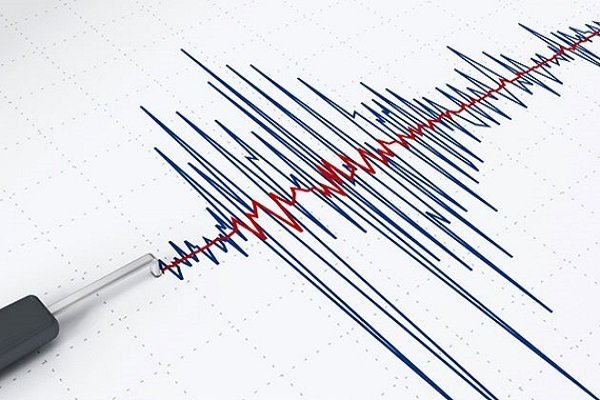 |
| shaking movement on Richter skell |
A second quake occurred within a span of one hour and was of lower intensity of magnitude 2.9 and occurred at the same location at 10 pm, the NCS said. Rohtak is situated nearly 60 km from Delhi. Delhi Earthquakes of less than five magnitudes are unlikely to cause large-scale damage, unless in case of weak or compromised structures. Delhi lies on Zone IV of the seismic map of India. Zones IV and V have a high probability of destruction.
This is the third time trembling has been felt in Delhi-NCR in the month of May and the fifth time in the last two months.
People of Delhi already facing the dreadful scenario of coronavirus and increasing numbers of patients in the region and maintaining social distancing and this earthquake creat panic in people's minds.
Why Earthquake Occurring in Delhi
Delhi comes under the Zone-IV, where highest damage
is possible due to earthquakes.
The entire Himalayan seismic zone is vulnerable to strong earthquakes. The
Indian tectonic plate is continuously driving into the Eurasian plates around
this region at a speed of 44 mm/year. Due to this motion of tectonic plates,
stress builds up, and the earthquakes are triggered to release tension
 |
| Properties of forces working for earth-shaking |
Many parts of north, east and northeastern India
are at constant risk of strong earthquakes due to this phenomenon. The maximum
risk areas for high-intensity earthquakes are classified as Zone-V in India.
The zone broadly comprises entire northeastern India, parts of Jammu and
Kashmir, Himachal Pradesh, Uttarakhand, Rann of Kutch in Gujarat, parts of
North Bihar and Andaman & Nicobar Islands. The long-term seismological analysis in the region
shows that the amount of energy getting accumulated in the subduction zones is
not equally dissipated through the small and moderate earthquakes that we are
seeing right now. The energy has been building up, and the only relief is a
strong earthquake. Consequently, an earthquake of magnitude higher
than eight has been projected in
the Himalayan seismic zone. To compare, the Nepal earthquake of 2015 was of
magnitude 7.8, and it claimed over 8,800 lives. Scientists, therefore, urge the
people and authorities to be prepared by strict adherence to the building
codes.
As they say, earthquakes do not kill people;
buildings do!
Subduction Zone
When two tectonic plates collide each other than always heavier plate slide beneath the litter plate. India and Eurasia collided some 90 million years ago, as Indian plate is heavier than Eurasian the continental crust
of the Indian tectonic plate was forced down under the Eurasian plate, sinking
down into the Earth's mantle to a depth of at least 200 km kilometers. Delhi earthquake occurring due to being on the subduction zone.

 |
| India earthquake zone |
- Get link
- X
- Other Apps


Comments
Post a Comment